Email:
bg654@drexel.edu
CV:
Download PDF
LinkedIn:
blaizegiangiulio
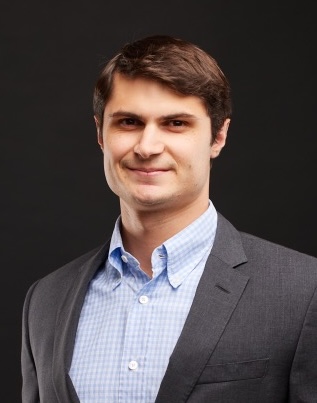
I am a PhD candidate in Economics at Drexel University. My research lies at the intersection of empirical international trade and applied industrial organization, with a focus on structural gravity models, transportation networks, trade costs, and the effects of trade policy.
I am on the 2026–27 job market and available for interviews.
Research Interests: International Trade · Applied Industrial Organization · Applied Econometrics
Job Market Paper
Trade Chokepoints JMP
Abstract
Trade chokepoints have become targets of armed disruption, although existing work treats such episodes as exogenous hazards. This paper models chokepoint disruption as a strategic choice. In a multi-country model, a disruptor country may pay to raise trade costs between other countries, diverting demand toward itself. Disruption therefore improves the disruptor's terms of trade even absent any geopolitical motive, and the gain grows with the corridor's importance to world trade. Retaliation that raises the disruptor's own trade costs extinguishes this economic motive while leaving a geopolitical motive untouched. I take the model to the 2023–24 Red Sea crisis using a new, network-based measure of logistical distance that captures each country pair's exposure to disruption of the Bab el-Mandeb Strait. Trade fell on exposed pairs, most sharply among Western-aligned pairs, and welfare losses rise with exposure while Iran's own gain is small. Treating the observed campaign as Iran's optimal choice reveals extraordinary leverage: slight intensification would gain Iran $48 to $78 million per year while costing the average Western economy $1.6 to $8.1 billion. Pure self-interest can rationalize the campaign only if it cost Iran under $78 million per year, below even the lowest estimate of Iran's annual support to the Houthis. Rationalizing it therefore requires a strictly positive weight on harming adversaries: in the benchmark calibration, Iran is willing to give up one dollar of its own welfare to destroy roughly $12 of Western welfare.
References and Committee
- Constantinos Syropoulos (Co-Chair), Drexel University, cas86@drexel.edu
- Yoto V. Yotov (Co-Chair), Drexel University, yotov@drexel.edu
- Sebastien Bradley (Member), Drexel University, sjb355@drexel.edu
- Mario Larch (Member), University of Bayreuth, mario.larch@uni-bayreuth.de
- Ohyun Kwon (Member), The Wharton School, University of Pennsylvania, theekwonomist@gmail.com